
 EN
EN



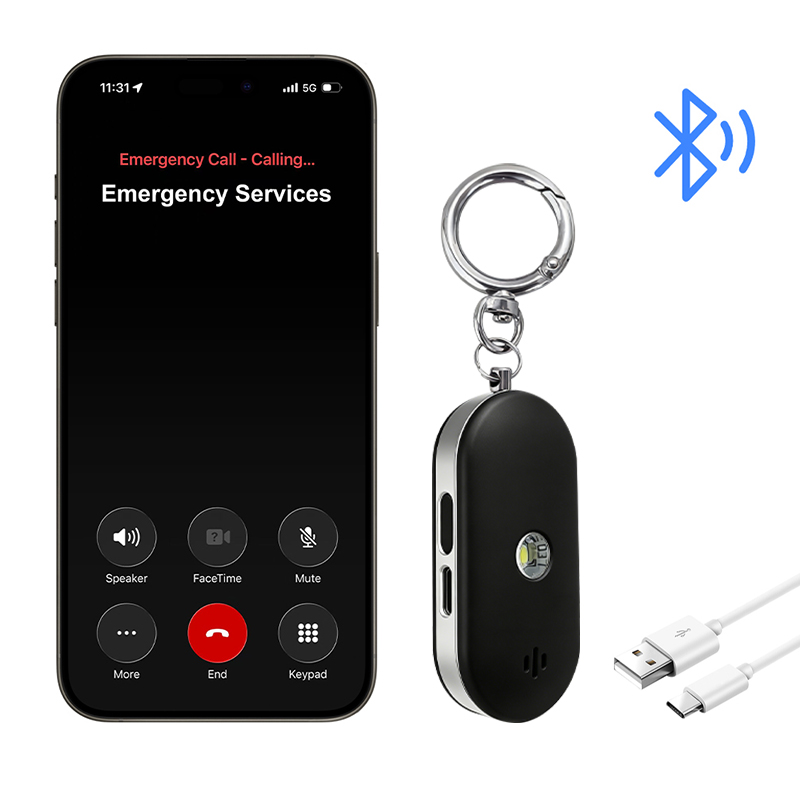
Personal alarm technology has crossed a significant threshold in recent years. What was once a simple piezoelectric buzzer producing a loud sound has evolved into a networked safety platform that combines multiple positioning systems, real-time communication, and intelligent sensing in a device small enough to attach to a keychain. Understanding what drives this evolution—and why it matters—requires a closer look at the specific technologies now embedded in leading GPS personal alarms.
Multi-System Satellite Positioning: Beyond Basic GPS
The term "GPS" has become shorthand for satellite navigation in general, but modern personal alarm devices integrate signals from multiple global navigation satellite systems simultaneously. In addition to the American GPS constellation, current devices process signals from Russia's GLONASS, Europe's Galileo, and China's BeiDou systems. This multi-constellation approach delivers significantly faster position acquisition times, better accuracy in dense urban environments where satellite signals are partially blocked, and reduced likelihood of complete signal loss.
For personal safety applications, this matters enormously. A woman activating an SOS alarm in a city center, surrounded by tall buildings, needs the device to report her location accurately and immediately—not after a 30-second acquisition delay. Multi-system receivers now routinely achieve first fixes in under 10 seconds, with horizontal accuracy of 2–3 meters under open sky.
Additionally, several advanced devices supplement satellite positioning with cellular triangulation (using mobile tower signals) and Wi-Fi positioning (using nearby network beacons). This creates a hybrid positioning system that maintains location functionality even in indoor environments or underground areas where satellite signals cannot penetrate—scenarios where personal safety incidents are unfortunately common.
4G LTE Connectivity and Real-Time Location Sharing
Early GPS alarm devices relied on 2G or 3G networks to transmit location data via SMS. The transition to 4G LTE has fundamentally changed the capability profile of these devices. LTE connectivity enables real-time location streaming rather than periodic position snapshots—a critical difference when someone is moving during an emergency. Emergency contacts and monitoring applications can now follow a live track rather than refreshing a static pin on a map.
4G also enables the voice call functionality that distinguishes the most advanced alarms. When an SOS is triggered, the device can automatically dial pre-programmed emergency contacts, allowing the user to communicate verbally if the situation permits. The connection quality and audio clarity achievable over LTE turns a personal alarm into a genuine two-way communication device during a crisis.
SMS Geofencing and Automated Alert Triggers
Beyond manual activation, newer GPS personal alarms incorporate geofencing capabilities. Users can define virtual geographic boundaries through companion apps. If the device enters or exits a designated zone—a school, a workplace, a neighborhood perimeter—an automated SMS or push notification is sent to designated contacts. This feature is particularly valuable for monitoring elderly parents with cognitive decline, children with defined safe zones, or lone workers whose movements need oversight.
The SMS alert architecture has also been enhanced with location links. Rather than transmitting raw coordinates that require interpretation, modern devices send a clickable link that opens the exact location directly in a mapping application. Emergency contacts receive actionable information instantly rather than having to manually convert data.
Strobe Light Integration and Multi-Channel Deterrence
The acoustic alarm remains central to personal safety device design—130dB output remains the industry benchmark, a sound level capable of drawing attention from 300 meters in open conditions. But the latest devices pair this with high-intensity strobe lighting that serves dual functions: it disorients potential aggressors in low-light conditions, and it acts as a visual beacon that allows responders approaching from a distance to locate the user even in noisy environments where the sound might not carry.
This multi-channel approach to deterrence and detection reflects a mature understanding of the scenarios in which personal alarms are activated. An attacker is more likely to disengage when confronted with a combination of extremely loud sound, blinding light, and the knowledge that a GPS location has been transmitted to external parties simultaneously.
Battery Technology and Operational Endurance
GPS and LTE connectivity are power-hungry technologies, and early implementations suffered from severely limited battery life that undermined their reliability as safety devices. Recent advances in lithium polymer battery density and ultra-low-power chipset design have dramatically improved the endurance profile.
Current high-quality GPS personal alarms achieve standby times measured in days rather than hours, with Type-C USB fast-charging reducing recharge time to approximately one hour. Some devices incorporate sleep modes that activate low-power positioning protocols during extended inactive periods, extending operational life without sacrificing responsiveness when activation occurs.
App Ecosystem and User Control
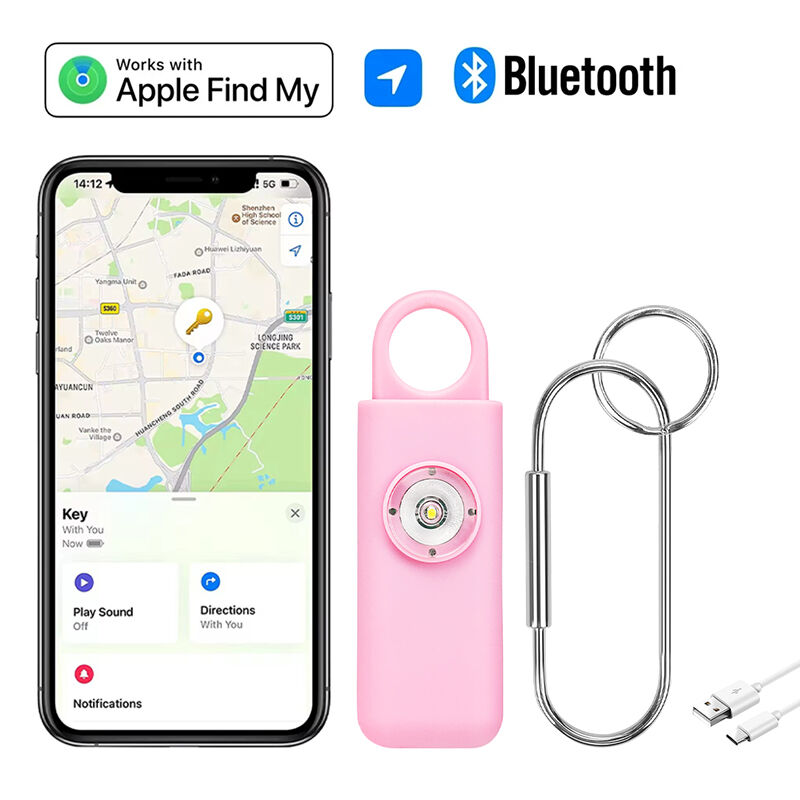
The companion mobile application has become an essential component of the modern GPS personal alarm. Through the app, users configure emergency contact lists, define geofencing zones, review location history, adjust alarm sensitivity, and receive device health notifications including battery status. The Tuya IoT platform, used by several leading manufacturers, provides a standardized app framework that supports multi-device management and smart home integration—allowing a personal alarm to function as part of a broader connected safety ecosystem.
The Engineering Challenge: Miniaturization
Integrating multi-constellation GPS receivers, LTE modems, Bluetooth chips, high-capacity batteries, acoustic transducers, strobe modules, and microcontrollers into a device that weighs under 50 grams while maintaining structural durability is a genuine engineering achievement. Leading manufacturers like DWELL, with 15+ years of product development experience, apply rigorous component selection and ABS material construction to deliver devices that withstand daily carry conditions while packing in full-featured connectivity.
The GPS personal alarm of 2025 is not an incremental improvement on its predecessors—it represents a categorical shift in what personal safety technology can deliver. For individuals, families, and organizations evaluating safety solutions, understanding these underlying technologies is the foundation for making informed purchasing decisions. Visit dwrlfactory.com to explore the full GPS alarm product range and request detailed technical specifications.
Table of Contents
- Multi-System Satellite Positioning: Beyond Basic GPS
- 4G LTE Connectivity and Real-Time Location Sharing
- SMS Geofencing and Automated Alert Triggers
- Strobe Light Integration and Multi-Channel Deterrence
- Battery Technology and Operational Endurance
- App Ecosystem and User Control
- The Engineering Challenge: Miniaturization