
 EN
EN



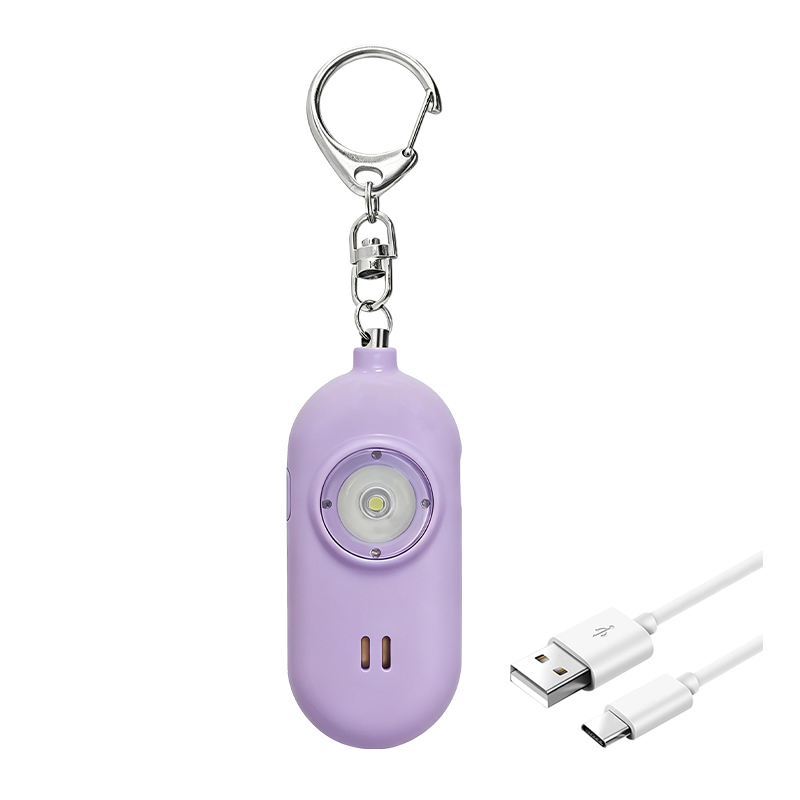
Personal alarms for women are not a monolithic category. The device that makes sense for a college student walking back to a dormitory late at night is a fundamentally different product from the one needed by a solo female traveler navigating unfamiliar cities, or a woman running early morning routes in a suburban neighborhood. Getting the selection right means matching specific product capabilities to the real-world scenarios in which the device will actually be used.
This guide examines five distinct usage contexts and identifies the features that matter most in each.
Usage Scene 1: Solo Commuting and Walking at Night
The most common scenario for which women purchase personal alarms is solo commuting—walking to transit stops, parking structures, or navigating poorly lit streets after work or social engagements.
For this context, the most critical features are immediate activation and maximum acoustic output. A 130dB alarm with a simple pull-pin or single-button trigger mechanism is the priority. Activation must be instinctive and possible under stress—complex button sequences are a liability when a threat materializes quickly. Compact keychain form factors work best here because they integrate into the hand during vulnerable moments (walking to a car, waiting for a bus) without requiring retrieval from a bag.
LED flashlight integration is a meaningful secondary feature for this scene. A high-brightness strobe not only serves as a safety light for illumination but can disorient an aggressor and signal distress to bystanders.
Look for: 130dB output, keychain form factor, pull-pin or single-button trigger, LED flashlight.
Usage Scene 2: Solo Travel and Unfamiliar Environments
Women traveling alone—whether for business or leisure—face elevated safety considerations in unfamiliar cities, hotels, and transportation hubs. For this profile, a GPS-enabled personal alarm with emergency call and SMS location-sharing functionality moves from "nice to have" to essential.
When an incident occurs in an unfamiliar location, the ability to trigger an automatic SMS containing a clickable map link to pre-set contacts is far more valuable than a loud sound alone. Emergency contacts and local authorities can know precisely where the traveler is, even if she is unable to communicate verbally.
Rechargeable battery capacity is also critical for travelers—devices with Type-C fast charging and multi-day standby time prevent the reliability gap that occurs when a device runs out during a long trip. Small form factor and airport security compliance (devices should not contain prohibited materials or exceed carry-on restrictions) are practical considerations.
Look for: GPS with SMS alert, emergency call function, Type-C recharging, multi-day standby, compact design.
Usage Scene 3: Running and Outdoor Exercise
Women who run—particularly in parks, trails, or neighborhoods during early morning or evening hours—need a personal alarm that stays securely attached during vigorous movement, can be activated with a single hand while running, and does not impede the exercise experience during normal use.
Wristband-style personal alarms address the attachment challenge: worn like a watch or fitness band, they are impossible to lose or drop during a sprint. Clip-on magnetic designs that attach to clothing are another option, offering easy placement and removal. For both form factors, the activation mechanism should allow single-hand, single-motion triggering.
For outdoor exercise, weather resistance is a non-negotiable feature. Sweat exposure, light rain, and morning dew can compromise electronics, so IP-rated splash-resistant housing is important to specify. Reflective elements on the device body add road safety value for low-light conditions.
Look for: Wristband or secure clip-on attachment, one-hand activation, splash/sweat resistance, reflective elements.
Usage Scene 4: Campus and Student Safety
University and college environments present a specific safety profile: a mix of familiar and unfamiliar spaces, significant variation in lighting, and activities that often extend into late hours. For student users, discreet carry combined with reliable deterrence is the dominant need.
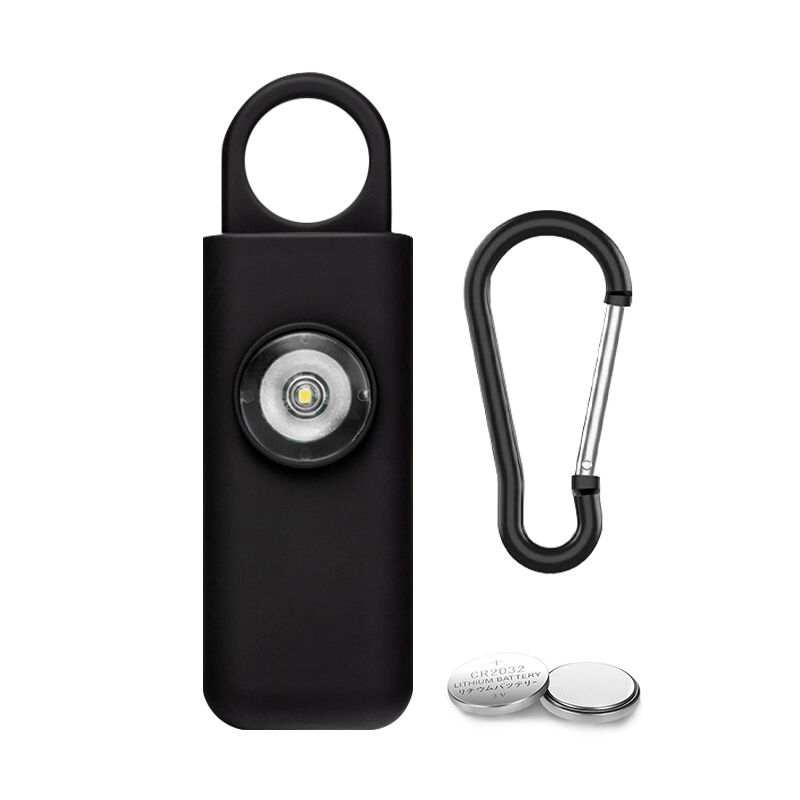
Discreet keychain alarms that look like accessories or ordinary items allow students to carry protection without drawing attention or violating campus appearance norms. At the same time, the device must be capable of producing a genuinely deterring alarm—a 100dB device that "sounds like an alarm" is less effective than a 130dB output that genuinely startles and draws immediate attention.
For this context, battery longevity is important. Students often forget to charge devices, making rechargeable devices with low-battery notification alerts more reliable than single-use battery models. A device that fails due to a depleted battery provides zero protection.
Look for: Discreet/stylish design, 130dB output, rechargeable with charge indicator.
Usage Scene 5: Elderly Women and Accessibility Needs
For older women—particularly those living alone or with limited mobility—personal alarms serve a slightly different function. Fall alerts, medical emergency summoning, and reliable connection to family members take precedence over portability and discretion.
The most important features for this profile are simplicity of operation and large, easy-to-activate controls. Complex interfaces that require app management or precise button presses are barriers to use in an emergency. A device with a prominent single trigger button, strong magnetic attachment for easy removal from clothing or neck lanyard, and loud enough output to summon neighbors is the baseline.
GPS with family-facing tracking apps allows adult children to periodically check location and receive automated alerts if the device detects a fall or the wearer exits a defined safe zone. Voice two-way communication capability allows the user to speak with family directly without finding and operating a separate phone.
Look for: Large trigger button, simple operation, GPS with family tracking, two-way voice, wearable form factor.
Making the Final Decision
The best personal alarm for any woman is the one she will actually carry, remember to charge, and be able to activate reliably under stress. Matching the feature set to the real usage context—rather than choosing the device with the most features on paper—produces the best safety outcome.
DWELL manufactures a comprehensive range of personal safety devices designed specifically around these usage scenarios, from minimalist 130dB keychains to fully connected GPS SOS alarms with two-way calling. Visit dwrlfactory.com to explore options matched to your specific situation.