
 EN
EN



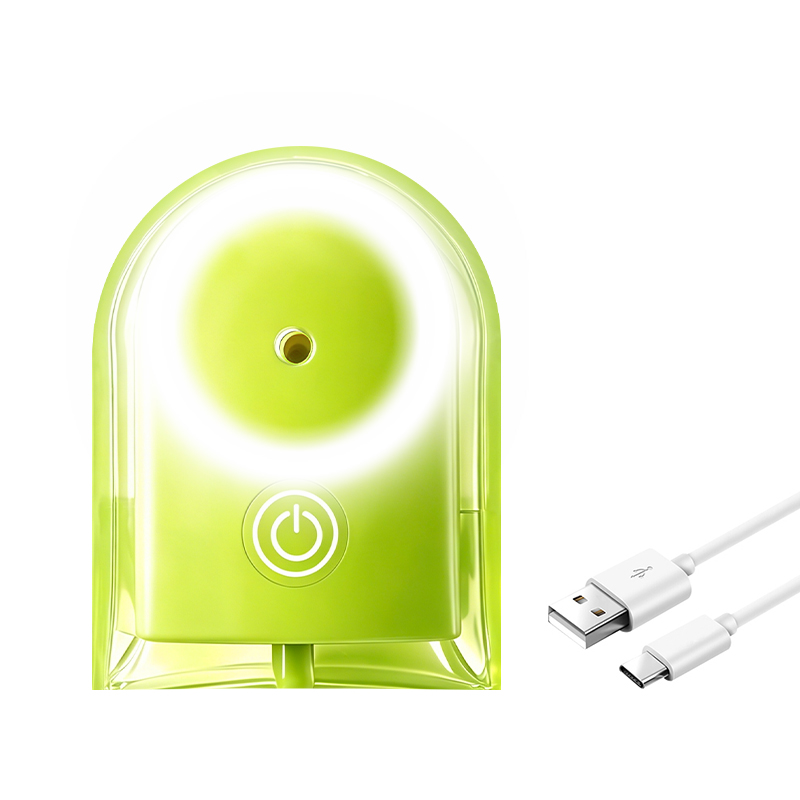
Personal safety technology evolves rapidly. Devices that were considered advanced five years ago are now standard commodity items, and the pace of innovation shows no sign of slowing. Against this backdrop of continuous change, one specification has remained the defining benchmark of effective personal alarm design for over a decade: 130dB. Understanding why this particular output level has persisted—and why it continues to matter even as GPS connectivity, LTE communication, and AI-assisted features expand the capability profile of personal safety devices—reveals something fundamental about how acoustic deterrence works.
The Physics of 130dB
Sound pressure level is measured on a logarithmic scale. The difference between 120dB and 130dB is not a 10-point improvement—it represents approximately three times the acoustic energy. The difference between 100dB and 130dB is roughly thirty times the energy. This is not a trivial engineering achievement in a compact device.
130dB is approximately the sound level of a military jet engine at 100 feet. It exceeds the human pain threshold of approximately 120dB. At this output level, a personal alarm does not simply make noise—it creates a physiological response in anyone within close range. Discomfort, disorientation, and involuntary reflex to move away from the sound source are documented effects at 130dB exposure. For the few seconds required to create distance from an aggressor, this physiological disruption is exactly what the device is designed to achieve.
At a broader range, 130dB output is detectable at approximately 300 meters in open environments. This means potential witnesses or responders in a wide radius are alerted to a possible emergency, not just those in immediate proximity. In urban environments with higher ambient noise, the effective range is shorter, but still substantially greater than lower-output devices.
Why 100dB or 120dB Devices Fall Short
The market contains personal alarms at various output levels. Devices rated at 100dB or 120dB are commonly available and often more affordable. Why does the 10–30dB gap matter in practice?
At 100dB—the approximate sound level of a power saw—an alarm is loud and attention-getting, but it does not produce strong physiological effects in nearby individuals. An aggressor who has committed to a course of action is unlikely to be deterred by a sound they can tolerate for several seconds while continuing their threat. The alarm becomes more of a signaling device than a deterrent.
At 120dB—approximately the level of a thunderclap at close range—the discomfort threshold is approached but not reliably exceeded. On a busy urban street with ambient noise at 70–80dB, the effective contrast of a 120dB alarm may be insufficient to distinguish it from other loud sounds and trigger the strong attention response needed.
At 130dB, the gap to ambient noise is wide enough and the physiological impact strong enough that the alarm becomes genuinely difficult to ignore or endure. This is the threshold where deterrence becomes reliable rather than probabilistic.
Durability as a Safety Feature
A personal alarm that fails due to mechanical wear, environmental exposure, or battery depletion is not a safety device—it is a false sense of security. The enduring relevance of 130dB personal alarms is inseparable from advances in manufacturing durability that have accompanied output improvements.
ABS (Acrylonitrile Butadiene Styrene) has become the dominant housing material for high-quality personal alarms because it combines impact resistance, dimensional stability, and resistance to environmental factors including moisture and temperature variation. Well-constructed ABS housings can withstand the drops, compressions, and exposure events that are inevitable in everyday carry.
The piezoelectric transducers that produce the acoustic output have also benefited from component quality improvements. High-quality piezo elements maintain their output specifications across thousands of activations, ensuring that a device purchased today will perform identically years from now. This reliability is particularly important for a device category where infrequent use is the norm—most personal alarms may be activated only once or twice in their service life, but must function perfectly on those occasions.
The Keychain Form Factor: Engineering Simplicity
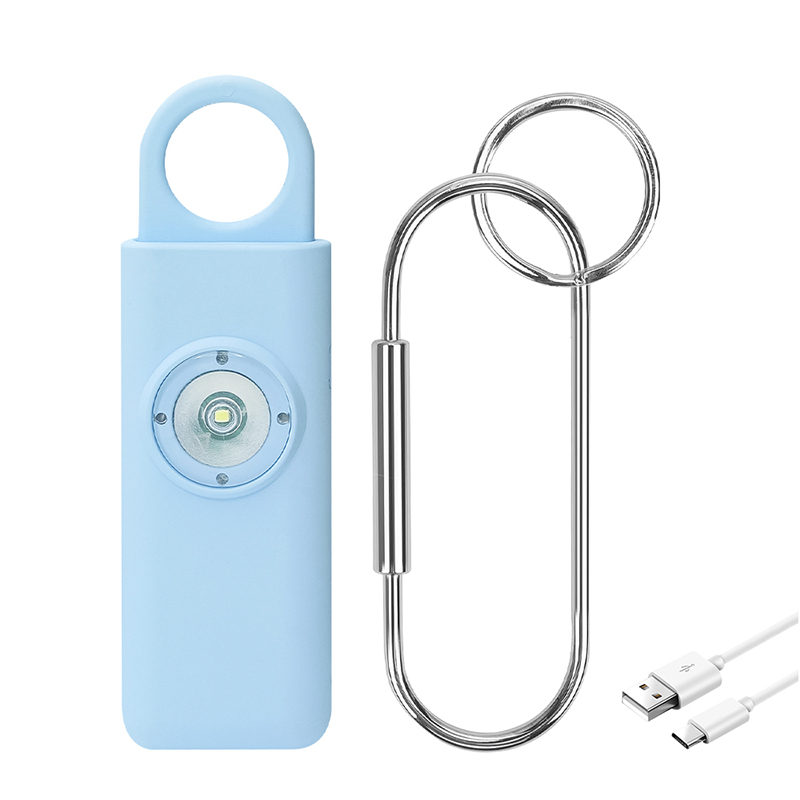
The 130dB personal alarm has survived because its core form factor—a device small enough to attach to a keychain, with a simple pull-pin or button trigger—has proven to be an optimal solution to the accessibility problem. A safety device that is not accessible when needed provides no protection.
The keychain attachment ensures that the alarm is co-located with an object users never intentionally leave home without. This passive carry behavior means the device requires no deliberate "remember to bring it" habit formation. It is simply always there.
The pull-pin mechanism remains preferred for its reliability under stress, its passive activation capability, and its intuitive simplicity. The sound-producing mechanism in a 130dB alarm has no moving parts other than the pin and the piezo element—creating an almost zero-failure design when high-quality components are used.
Rechargeable Reliability: The Type-C Upgrade
One of the most meaningful improvements to the 130dB alarm form factor in recent years has been the replacement of disposable batteries with built-in rechargeable lithium cells charged via Type-C USB. This change addresses a fundamental reliability concern: a device with a depleted battery provides no protection.
Type-C USB is now universal across smartphones, laptops, and accessories, meaning users can charge their personal alarm from any of these sources. Fast-charging capability means a depleted device can reach full capacity in under an hour. Low-battery indicator LEDs provide proactive notification before depletion becomes a problem.
This upgrade has removed the most common real-world failure mode of personal alarms—the dead battery—while adding the flexibility of a modern charging ecosystem.
130dB in the Connected Safety Era
The emergence of GPS and LTE-connected personal alarms might suggest that the standalone 130dB device is becoming obsolete. The reality is more nuanced. GPS-connected alarms deliver capabilities that the acoustic device cannot match: location transmission, emergency calling, geofencing. But they also introduce complexity, cost, and battery management requirements that make them inappropriate for many users and use cases.
The 130dB standalone alarm occupies a specific and enduring niche: an affordable, reliable, always-on personal safety device that requires minimal management and works immediately under any conditions. For a student at a university, a child walking home from school, an elderly person in a low-risk environment who needs a simple safety tool, or anyone who wants an effective deterrent without connectivity dependencies, the 130dB alarm remains the optimal choice.
Many users carry both: a connected GPS device for situations where location transmission matters, and a 130dB alarm for immediate acoustic deterrence. These are complementary tools, not competing alternatives.
The Manufacturer's Perspective
At DWELL, over 15 years of personal safety product manufacturing have reinforced a consistent insight: the devices that earn lasting customer trust are not those with the most features, but those that perform reliably, feel solid in the hand, and work without hesitation when the moment comes. The 130dB personal alarm embodies this philosophy. Its simplicity is a feature, not a limitation.
Producing a genuine 130dB output from a compact, durable housing requires quality component selection, precise acoustic engineering, and rigorous production standards. The gap between a claimed 130dB specification and an actual 130dB measured output is significant in low-quality products—a difference that can be the difference between deterrence and failure.
The endurance of the 130dB standard is ultimately a reflection of fundamental physics, human ergonomics, and practical safety needs that do not change with technology cycles. Visit dwrlfactory.com to explore the full range of 130dB personal alarms, from minimalist keychains to feature-enhanced models with LED lighting and USB recharging.